Normans Rare Guitars 30 Years of Buying Selling & Collecting Book Review
Information technology begins in late November on a rainy morning in Paris. The previous mean solar day had almost been a write-off – fog-induced flight cancellations in London and and so an extended spell in rush-60 minutes traffic on the southbound autoroute from Charles de Gaulle didn't exactly provide a motion picture-postcard welcome to 1 of Europe'due south most attracting cities. The UK and France may only be separated past a single ane-hour timezone, just spending the best function of a twenty-four hours in an airport causes a palpable sense of disorientation, as does waking up before dawn to find the city lights still flickering through the drizzle running downwardly our hotel window.
After falling victim to the Parisian traffic again and arriving late back from breakfast, nosotros brand our apologies to our commuter and head due south-west to the small town in the Yvelines département that is abode to one of Europe's most remarkable collections of musical instruments and rockstar memorabilia. At that place's a small detour en road to pick up a 1963 Stratocaster previously endemic by Jimi Hendrix. No big deal. It sits in its example in the dorsum of the minivan adjacent to the photography gear and we get the feeling that transporting irreplaceable, near-priceless pieces of rock history has become an everyday occurrence
for our hosts.
And who are they, you lot ask? Ageing rockstars with a vault full of storied gear and shady anecdotes to match? Members of the French business organisation elite who have chosen to invest their Euros in the ever-affectionate stock of golden-era Gibsons and Fenders?
The reality couldn't be more different.
Star guitars
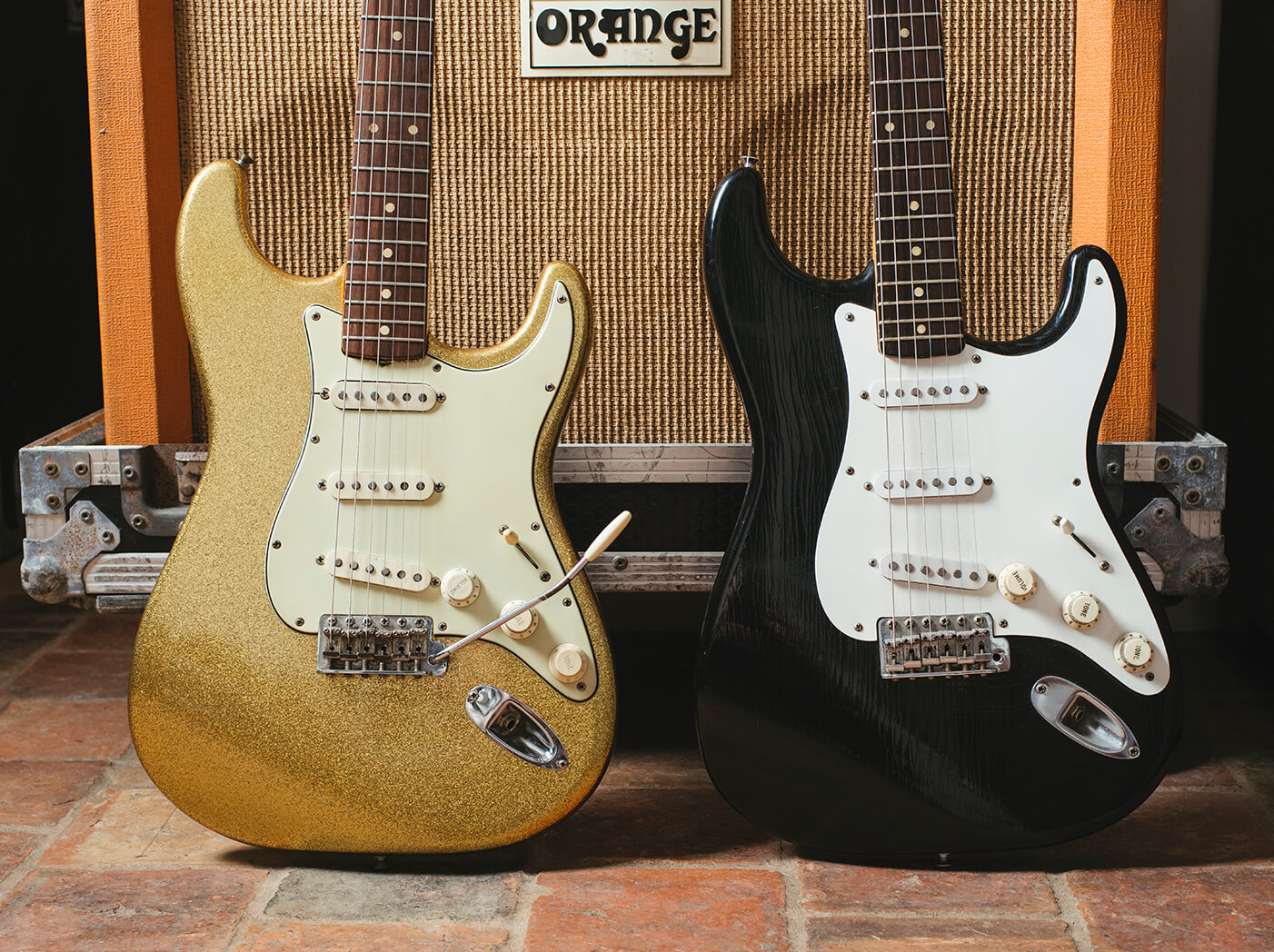
Those of you who spend far too much time looking at other people's guitars on the cyberspace may already be following Matt's Guitar Shop on Instagram, the business relationship of self-confessed guitar-aficionado Matthieu Lucas.
Lucas is the owner and curator – along with shop manager Max Bruneau – of a collection that's been amassed past buying and selling primarily in the digital domain, although the pair are currently on the lookout for a showroom in central Paris. Developing a business online offset before investing in bricks and mortar has become a familiar story in recent years, but the most startling fact in all of this is that Matt is merely 25 years of age.
You lot'd be forgiven for thinking that an inheritance or lottery win tin be the only explanation for someone then young being in possession of a treasure trove of gear, simply Matt merely traded his manner up. Although he admits to non being peculiarly academic, there's no doubting his entrepreneurial savvy. The journey began when Matt used some of the money he'd made waiting on tables to buy a vintage Jazzmaster that he'd seen advertised for sale locally.
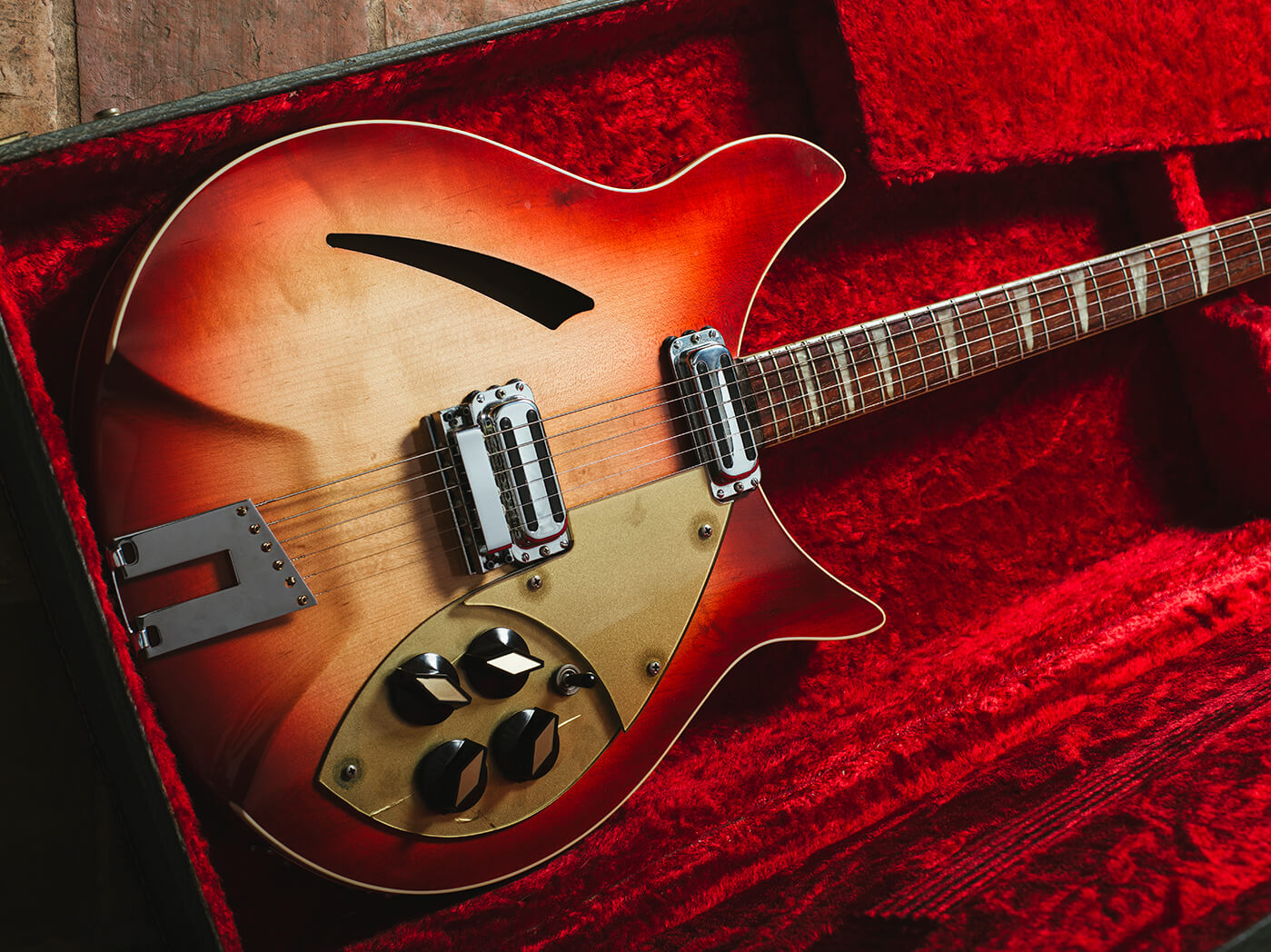
Unbeknown to him, he'd stumbled over a prototype that was worth a lot more than than he paid for it. Matt sold the guitar to Norman Harris of Norman's Rare Guitars fame in California and used the profit equally a springboard to start dealing in vintage instruments. He somewhen traded up to a player-course Burst, and information technology was the auction of this that allowed him to starting time competing in the big league and acquire such instruments as a former Bonamassa 1959 Les Paul, Jeff Buckley'south Telecaster, a Hendrix Stratocaster and much more.
During the day that nosotros spend hanging out with Matt at his place, along with Max and a trio of canine assistants that includes a pair of exuberant Dalmatians, information technology feels as though we barely scratch the surface. Matt realised early on on that celebrity-owned gear with provenance was a lucrative area in which to invest, equally the fan-appeal of the artist connexion will often dilate the value of an instrument way beyond that of an equivalent piece with no connexion to a famous histrion.
A remarkable 1960 flametop 6120 formerly owned by Brian Setzer, Tal Farlow's paradigm Gibson signature model and gear owned by Slash, Richie Sambora, Gary Moore, Billy Gibbons, AC/DC and many more will accept to wait until another day. Across the following pages, Matt talks us through some of the highlights of his guitar-trading career to engagement.
The instruments are fairly astonishing, and you might have heard of ane or two of their previous owners…
Jeff Buckley's 1983 Fender USA Telecaster
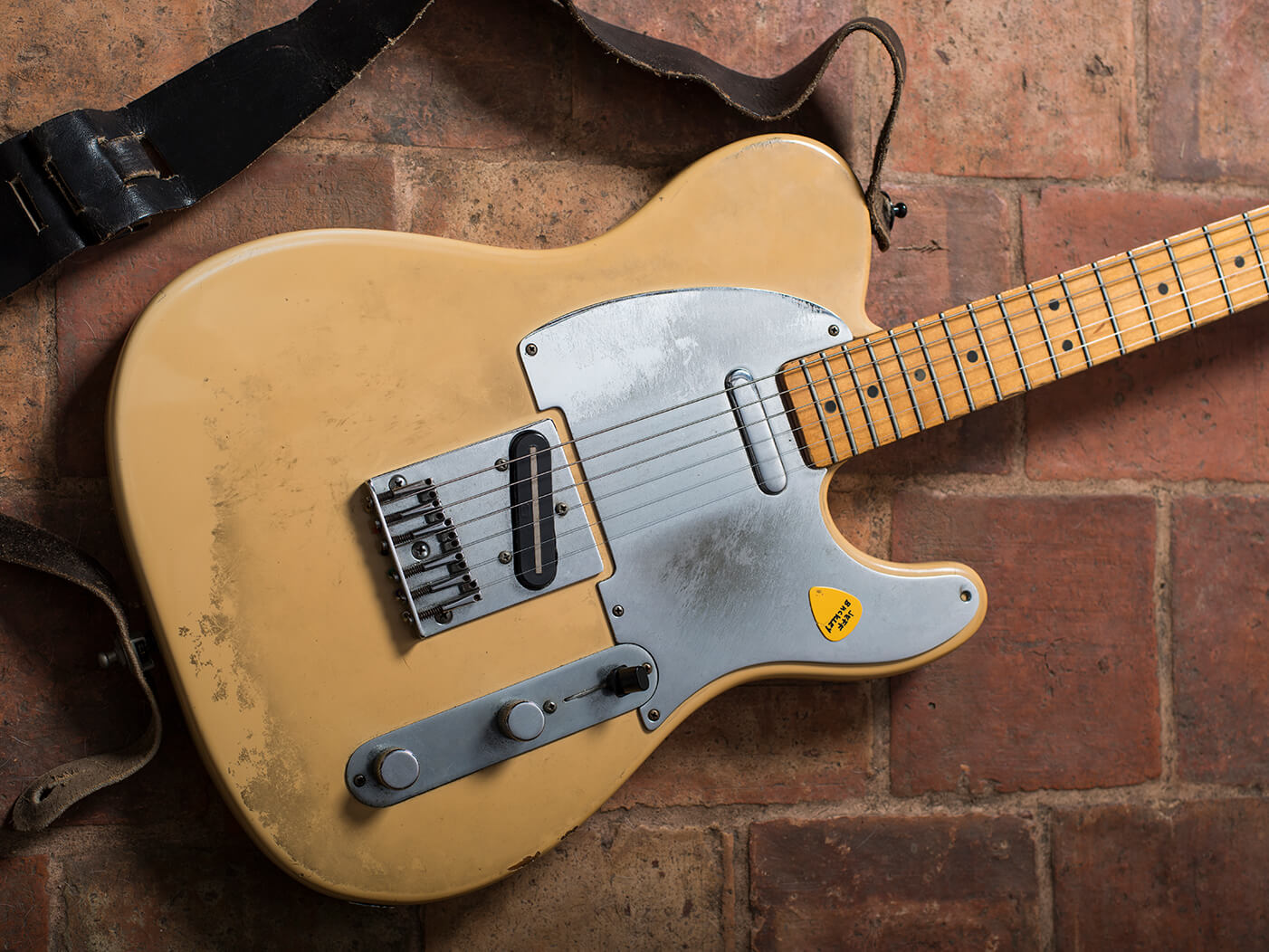
Over 2 decades on from Jeff Buckley'south death at the age of just 30 in 1997, the loss of such an astonishing talent still feels, in artistic terms at least, like 1 of the keen unresolved cliffhangers in the history of popular music. Unfinished studio recordings and demos such as The Sky Is A Landfill and Jewel Box hint at a songwriter and performer capable of both explosive drama and aching fragility, who was only beginning to spread his wings.
Although Buckley besides used a Les Paul Custom and a Rickenbacker, this 1983 Telecaster – loaned to him by a photographer friend Janine Nichols in 1991 after all of his valuables were stolen from his Los Angeles flat – was the guitar that remained his number one: from the E Village coffeehouse gigs at which he made his proper noun, throughout the recording of Grace and right upward to his untimely death. Subsequently his passing, Buckley'southward family unit returned the guitar to Janine Nichols, who sold it in New York. It was in the possession of a British collector for effectually six years until Matt bought it in October 2017. It definitely resides in the 'not for auction' section of Matt'south collection.
"The only modern he didn't practise was the pickguard," says Matt. "Information technology'south a Carvin pickguard. The photographer who owned the guitar put that pickguard on and it doesn't match the spiral holes. In the 80s, a lot of brands were making replica parts for Telecasters et cetera, just not exactly the same. Simply she preferred the mirror pickguard. Jeff re-fretted information technology with colossal frets when he got it and replaced the pickup."
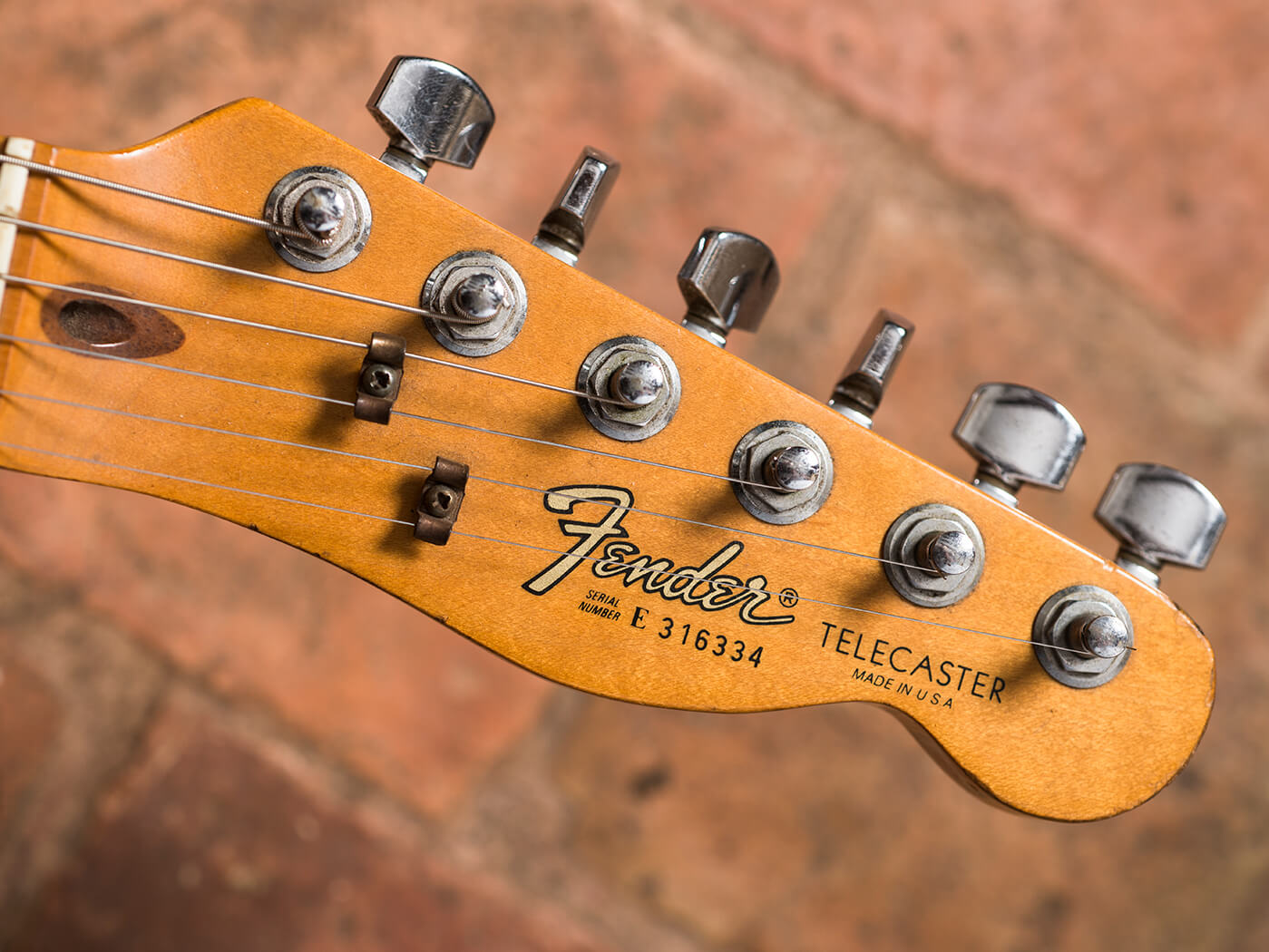
Although accounts differ as to exactly when Buckley installed the Seymour Duncan Hot Lead Stack pickup in the bridge position, it was certainly in situ for the extensive Grace tour dates and festival appearances in 1995, and Matt says the unique sound of the guitar may in function be downward to the way the pickup was fitted: "I recall it was solder work that was not properly washed – but information technology sounds like information technology's nigh expressionless or out of phase," he says.
"When you hear the arpeggios of Grace, it's very thin and very brilliant, and it'due south all in that span pickup. And the Hallelujah sound, it's the mix of the neck pickup, which is very fat, with the very tinny audio of the span pickup. That's the magic of the sound of the guitar."
Although Matt was familiar with Buckley's music when he bought the guitar, information technology was simply later on that the significance of the musical instrument hit home. "After buying it, I realised that he inspired so many artists," he reveals. "The other day, we showed it to Matthew Bellamy of Muse and he said he started to sing the way he sings because of Jeff Buckley. Matthew told me that he discovered him at a festival and he inspired the singing and guitar playing on the first two Muse albums.
"In the 1990s, there were a lot of large singers like Kurt Cobain, Eddie Vedder, but that was not the mode of Jeff Buckley. The dazzler of Jeff Buckley is that he was a magical bibelot of the 90s, because information technology was not the mood of the 90s to compose this way and to sing this manner. His influence is still huge today on many people, and it makes this guitar important. Knowing that then many artists of today grew up listening to Jeff and seeing that his influence is all the same that strong xx years later is simply amazing."
Although it would be tempting to keep such an iconic artist's musical instrument behind glass, both Matt and Max are firm believers in guitars being played. "The first thing we did when nosotros bought information technology was play Hallelujah!" Matt admits. "It sounds amazing. We are very proud of this guitar. On paper, it's not a very good instrument, but it was played then much, it's very airy and open… that clarity and volume that an 80s musical instrument isn't supposed to have!"
1959 Gibson Les Paul Standard aka 'Spot'
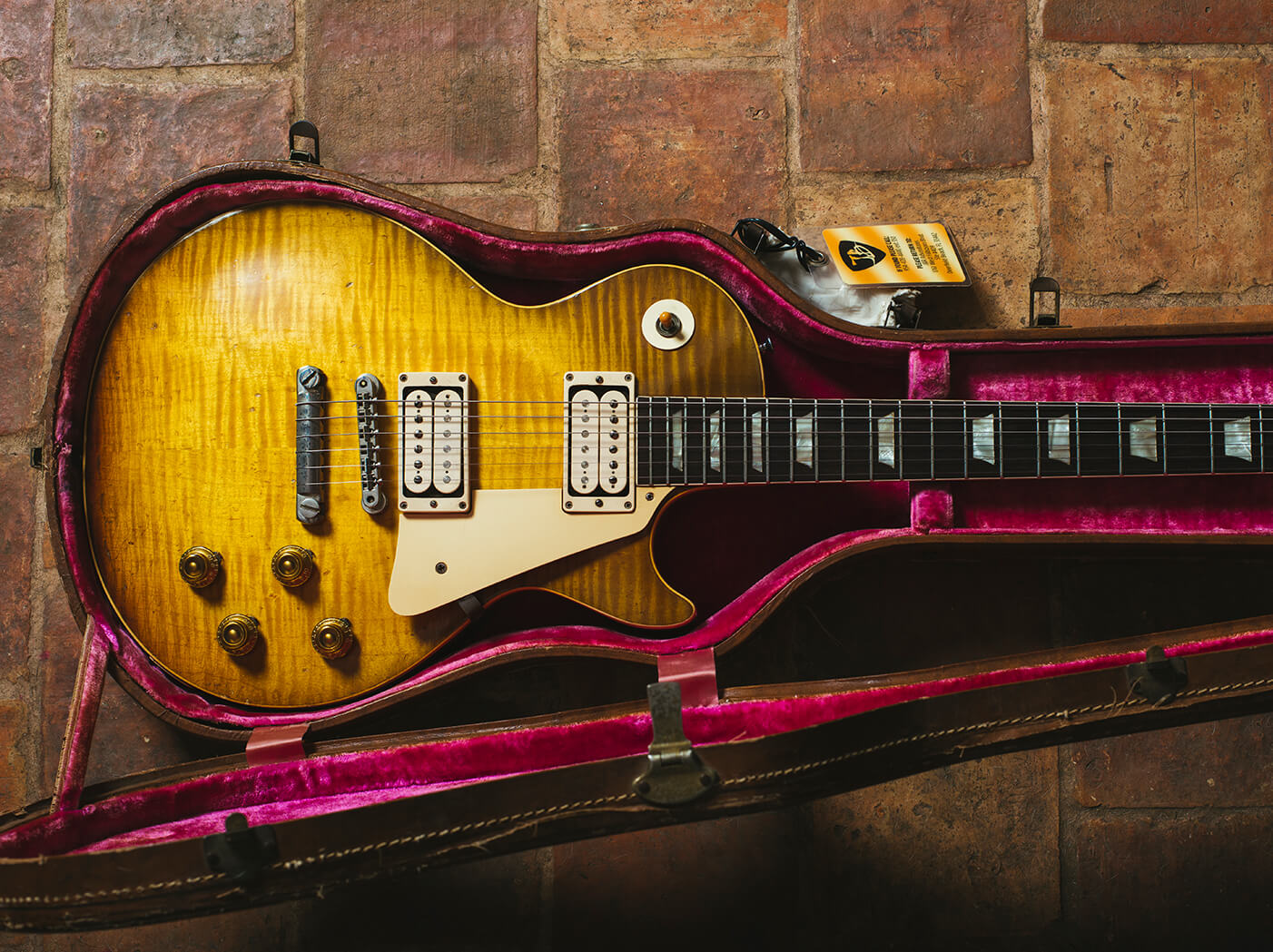
Mayhap the precious stone of Matt's glittering collection is 'Spot', the Gibson Les Paul Standard series number 9-1688 with distinctive double-white PAFs, an incredible pinnacle and the unfaded night patch of finish down at the tail end that gave the guitar its nickname. Although Spot has changed easily several times, in recent years it's been one of Joe Bonamassa'southward go-to Les Pauls. When Bonamassa put the guitar upwardly for sale through Rumble Seat Music in Nashville – the metropolis in which he was in the procedure of ownership a 2d abode – Matt took the opportunity to purchase a guitar that he'd long lusted subsequently.
"It was a guitar that I ever loved," he remembers. "Fifty-fifty when I didn't know anything almost Bursts et cetera, when I was cypher-scoring with Bursts and I hadn't played one, I called this guitar the double-white guitar. I always loved the sound of this guitar, specially at the Deadline testify [filmed for Bonamassa'south 2013 Tour De Forcefulness DVD], because Joe had a massive and woody sound. When Joe was playing Spot, he had that special thing that he didn't get, in my opinion, on some other electric guitar. Even with [his other Les Pauls] Skinner or Snakebite. The neck pickup of Spot is really special."
When a guitar of this stature comes onto the market, prospective buyers have to movement fast. "When Joe decided to sell information technology, I saw the news and we texted each other," Matt recalls. "I texted the guy who was managing the sale at Rumble Seat Music. The day Joe decided to sell Spot, it was a done deal. Joe was very patient with me and he gave me a lot of time to comprehend it, because he knew that it was going to be 1 of my dream guitars that I would keep and play. I remember he loved the fashion that we were as passionate about the guitar every bit he could be.
"Every fourth dimension I run into Joe, when nosotros talk about Spot, he says: 'Yeah, I still dearest that guitar.' I don't think he regrets information technology, simply he surely misses information technology… I call up he owned it for seven or viii years, it was in his rig for every tour, every studio anthology, he composed a lot with it. It was a big function of his vintage-guitar career.
"The day I came back to France with the guitar [with its own aeroplane seat, naturally – Ed], I immediately had to go to the French Alps for a small holiday and I couldn't allow Spot exist at home… information technology was incommunicable for me. I sent Joe a movie of the guitar in front of the snow! But he knows it's in good hands and information technology'south a very special guitar for me."
The 25-twelvemonth-old admits to having played close to 200 original Bursts – this writer is into double figures but has a long, long style to go to take hold of up. In the light of his experience, we inquire Matt what, even by the stratospherically high standards of 1958-60 Les Pauls, makes Spot different.
"With Bursts, they have so much personality, different energy and dissimilar character," he explains. "It'southward a very personal thing. Having Spot is like a dream I still don't believe! I'g not supposed to accept that kind of guitar yet. Simply the tone is very special, and very dissimilar to other Bursts I've tried. The neck pickup is very woody, it sounds almost like a Strat."
Nosotros guess that this one's non for sale, at any cost, and Matt confirms our suspicions. "The guy who will buy this from me is not born yet," he laughs. "If I had to sell everything, I would sell everything except that guitar. It's very special for me. I hoped to own it one mean solar day, but I didn't think Joe was going to permit this i go."

That brings us to our side by side question: what does a guitar collector do once they've found the one?
"There's always another Holy Grail!" Matt affirms. "It's always very catchy, considering if you've got the real virus that I've got, information technology never stops! I was lucky enough to play Rick Nielsen'south Explorer recently… it's actually something! It has even more power than a Les Paul, it'southward a totally different feel. It'southward like a lion that hasn't eaten for seven days! Only you never know. Some twenty-four hour period you wake upwardly and receive an email that changes everything… it changes your year. Real geeks like united states of america will never find the solution to our problem!"
Kossoff/Clapton 1955 Gibson Les Paul Custom
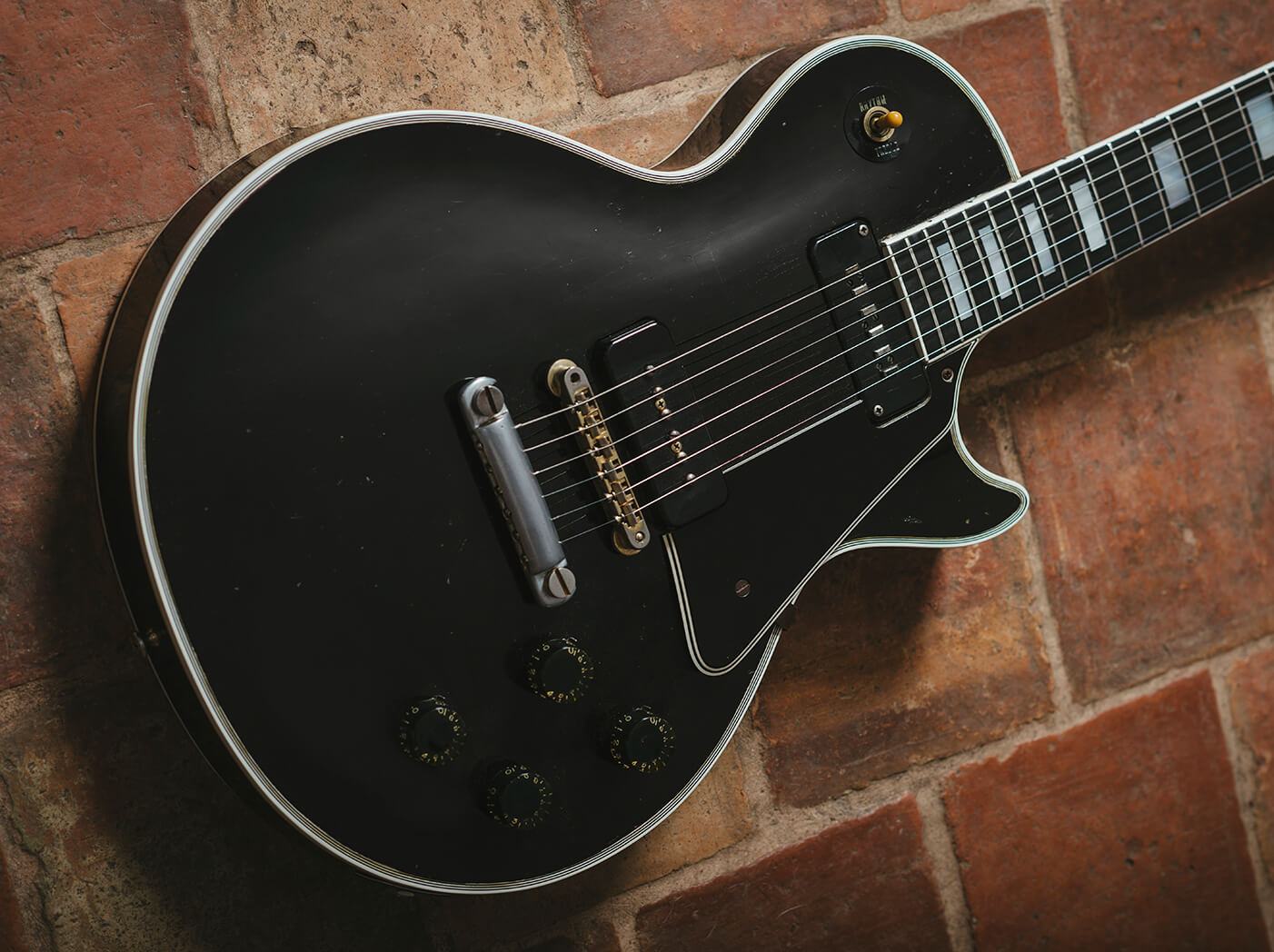
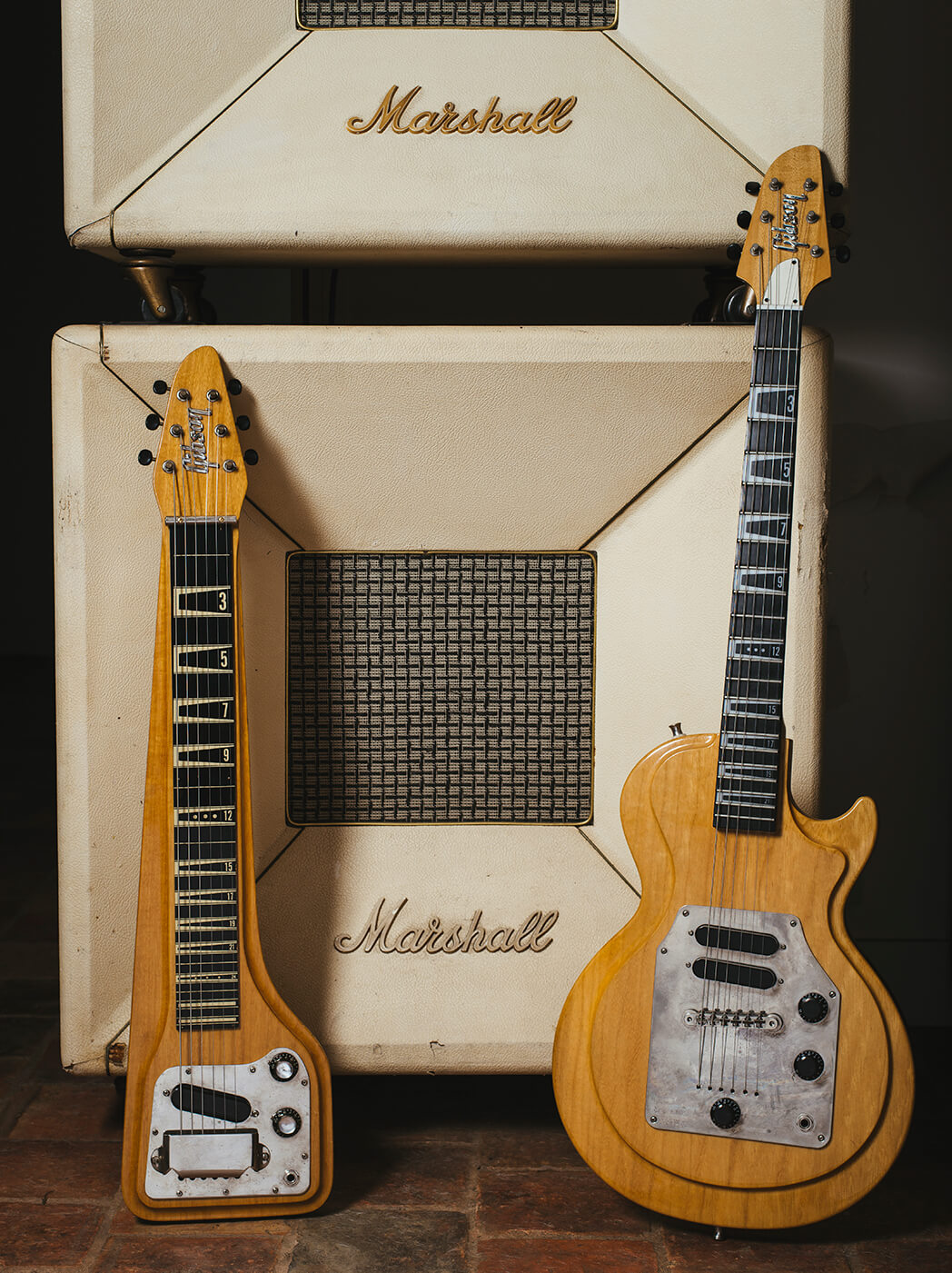
From i amazing Les Paul to another. The side by side musical instrument to be removed from its case and placed gently on the tiled floor of Matt's 17th-century abode for our perusal was owned by a teenage Paul Kossoff prior to Free, and quite maybe traded with Eric Clapton and played onstage with Cream in 1967.
Kossoff obviously scraped the yellowed lacquer off the binding of the and then-10-year-old guitar to restore information technology to its original white appearance, and blacked out the 'Les Paul Custom' legend on the truss-rod cover. He also wrote his name on stickers that he stuck to the underside of the command and switch cavity plates.
"When we started doing business, nosotros tried that guitar maybe like five years ago," remembers Matt. "We went to see the guitar, but we didn't have the coin. So terminal Dec, another guy was selling information technology and we figured it out. It's a '55 Black Beauty bought by Paul Kossoff's father in the USA, and he brought it dorsum to his son in London.
"There are pictures of Kossoff with short pilus, 15-16 years onetime, playing that guitar," Matt continues. "He was playing information technology with Black Cat Bones before Free. He was trading a lot with Eric Clapton and you tin encounter a moving-picture show of Clapton with that very same guitar in 1967 in Cream. The guitar initially came from Eric Clapton'south tour manager."
It's a guitar with the dejection in its Dna, and another very special ane for Matt. "I'm a huge Paul Kossoff fan," he says. "When I discovered his music, I understood the genetic link between BB King, Paul Kossoff and Angus Young, with that vibrato. That was really important for me and after five years thinking I could never buy that guitar, I am very happy to own it."
Jimi Hendrix's 1963 Fender Stratocaster
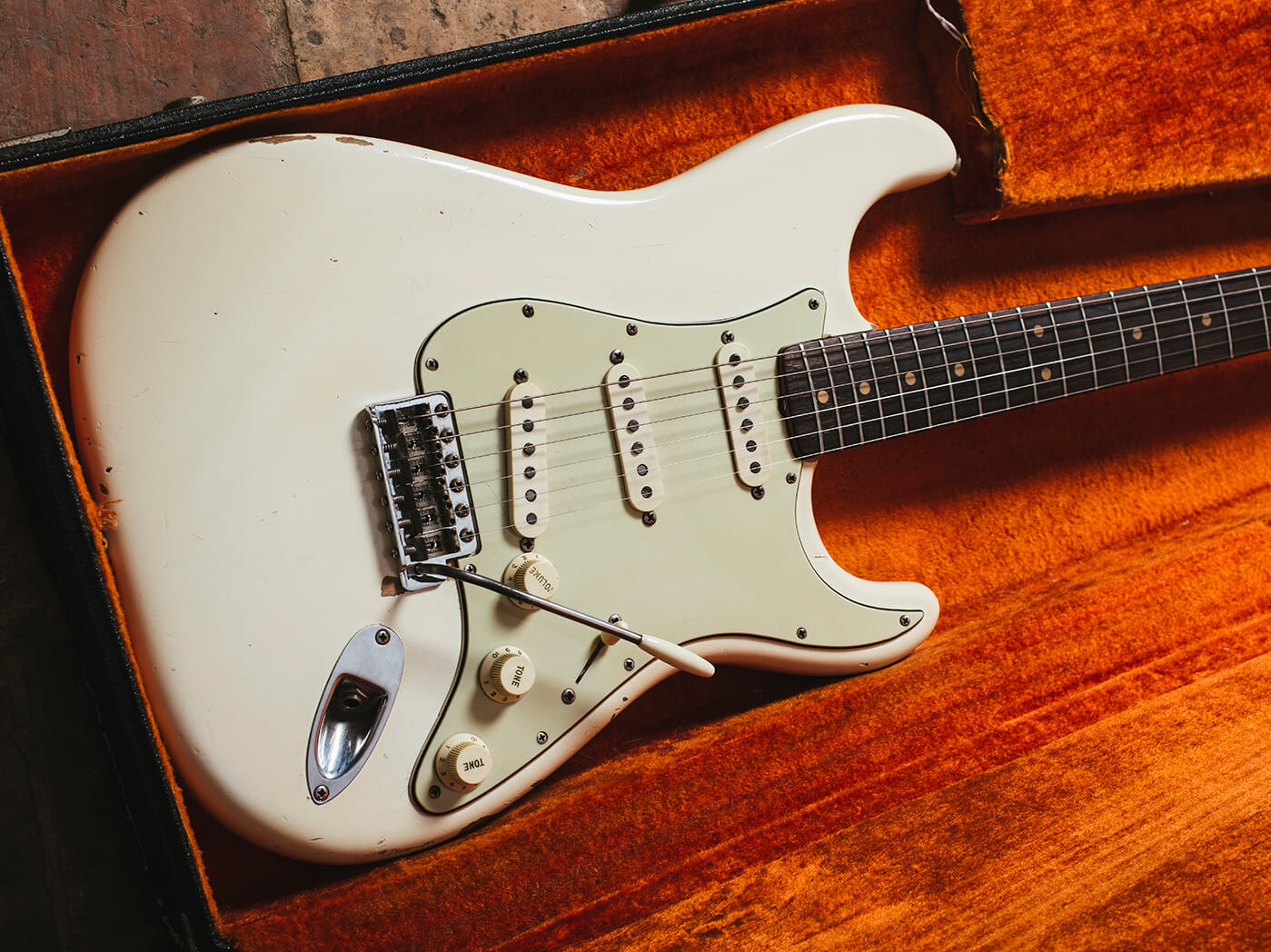
Our attention turns to the guitar that we referred to earlier – the precious cargo that rode role of the manner here with us in the back of the van. One of Hendrix's outset Stratocasters, Jimi played this guitar when he visited Juggy Sound studios in New York, where he worked in 1965 after parting ways with Little Richard. The Strat previously belonged to studio possessor and R&B producer Henry 'Juggy' Murray Jr.
It generally stayed at the studio, although Hendrix took it forth to various other sessions and information technology even fabricated its manner to his father's house in Seattle. Jimi'due south younger brother Leon remembers seeing the guitar when the pair lived together for a time in 1968, while Seymour Duncan recalls working on the instrument's pickups. The white paintjob is actually a very old refinish that may even have been done past Hendrix himself, who plainly had a preference for white Stratocasters. That said, his blood brother remembers him being less than keen on the mint-green 'guard.
A left-handed strap push was never added, but this might be explained by the fact that Jimi mainly played the guitar in the studio. There'southward likewise photographic testify of him playing a Jazzmaster live with Wilson Pickett in 1966 using the stock, right-handed strap-button orientation. If information technology did go far his way, he obviously found a way to cope with it, and he could have done the same with this guitar.
"From what the provenance says, it was one of his starting time Stratocasters," says Matt of the 1963 model. "The tremolo arm was modified past him to be more playable for a leftie. You lot tin can see dings along the cervix from rings that appear to be from a leftie player.
"In 1970, Jimi gave the guitar back to the guy who owned the studio as a cheers for giving him a adventure in New York City, and it was later sold by his nephew. Information technology'south such a special guitar. When you plug information technology in and play it, the magic happens!"
Eyeful tour
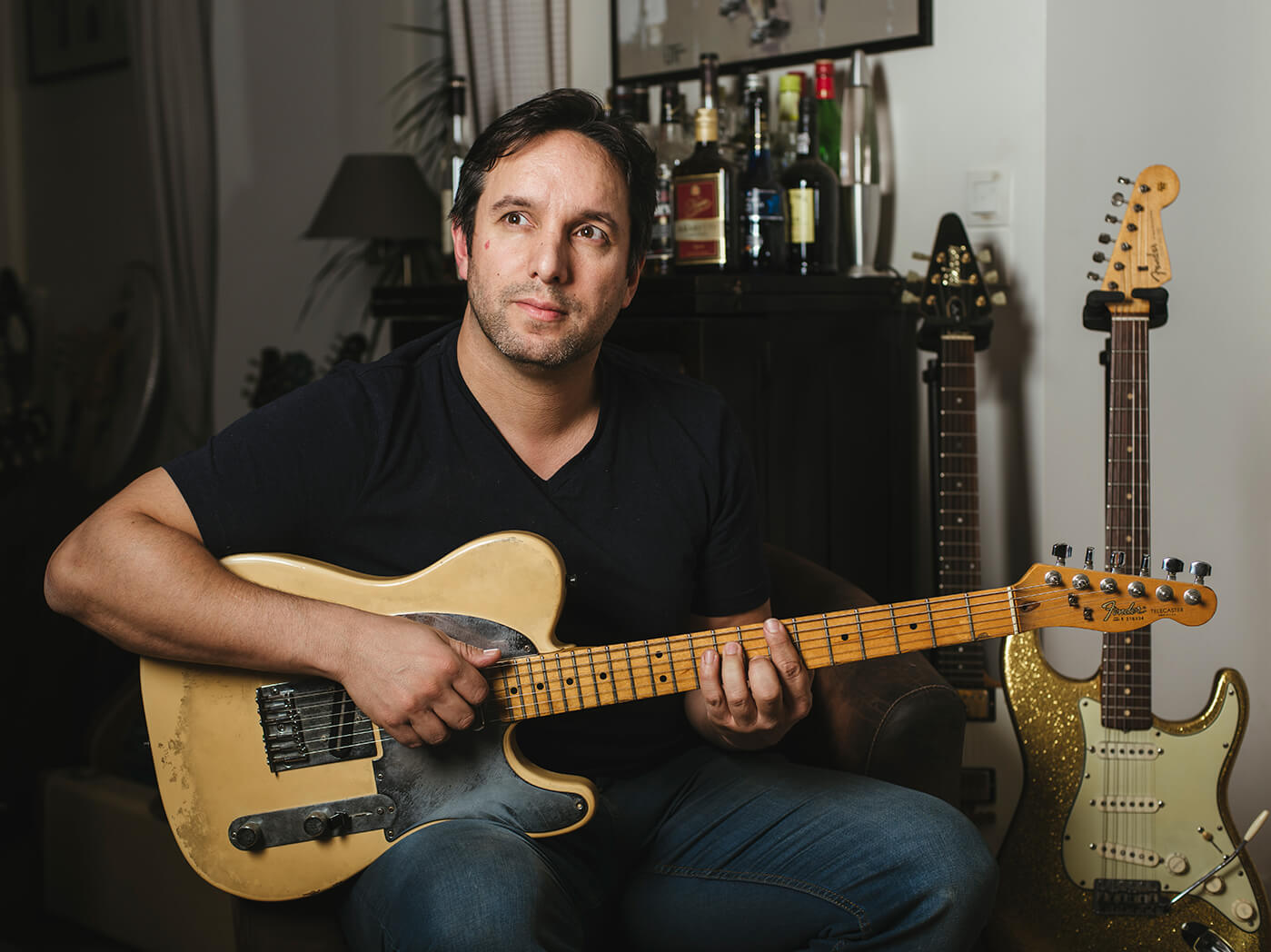
As our time with all of these amazing guitars comes to an end and we set up to venture back into the traffic, nosotros start to remember about that magic. Some of the guitars on these pages are objectively fantastic instruments, regardless of association. The David Knopfler Strat, for instance, is one of the nicest pre-CBS Stratocasters nosotros've ever played and it stands out fifty-fifty in the company of other Fenders from the same era.
And Spot? In terms of tone and feel, it's comfortably upwardly there with the very best of the dozen-or-so Bursts we've spent a meaningful amount of time with and that top really is jaw-dropping.
And so there'due south the Jeff Buckley Telecaster. Matt'due south right – on paper, not many people become excited about 1983 Telecasters. Yet before you even plug information technology in, there'south something about this guitar: a crystalline quality even to its acoustic voice that hints at the kind of beautiful clean tones that Jeff Buckley coaxed from information technology. Perchance he played it and so much that it opened right up, or maybe information technology was greater than the sum of its parts from the moment it rolled off the production line.
Either style, we reckon that between Spot, the Knopfler Strat and the Jeff Buckley Telecaster, we've got the gig covered. What exercise you mean they're not for sale? Oh well, the search continues…
Follow @mattsguitarshop on Instagram or visit mattsguitar.store to see the electric current inventory. We'll be publishing more than in-depth looks at these guitars, so scout this infinite!
Source: https://guitar.com/features/collections/matthieu-lucas-matts-guitar-shop/
0 Response to "Normans Rare Guitars 30 Years of Buying Selling & Collecting Book Review"
Post a Comment